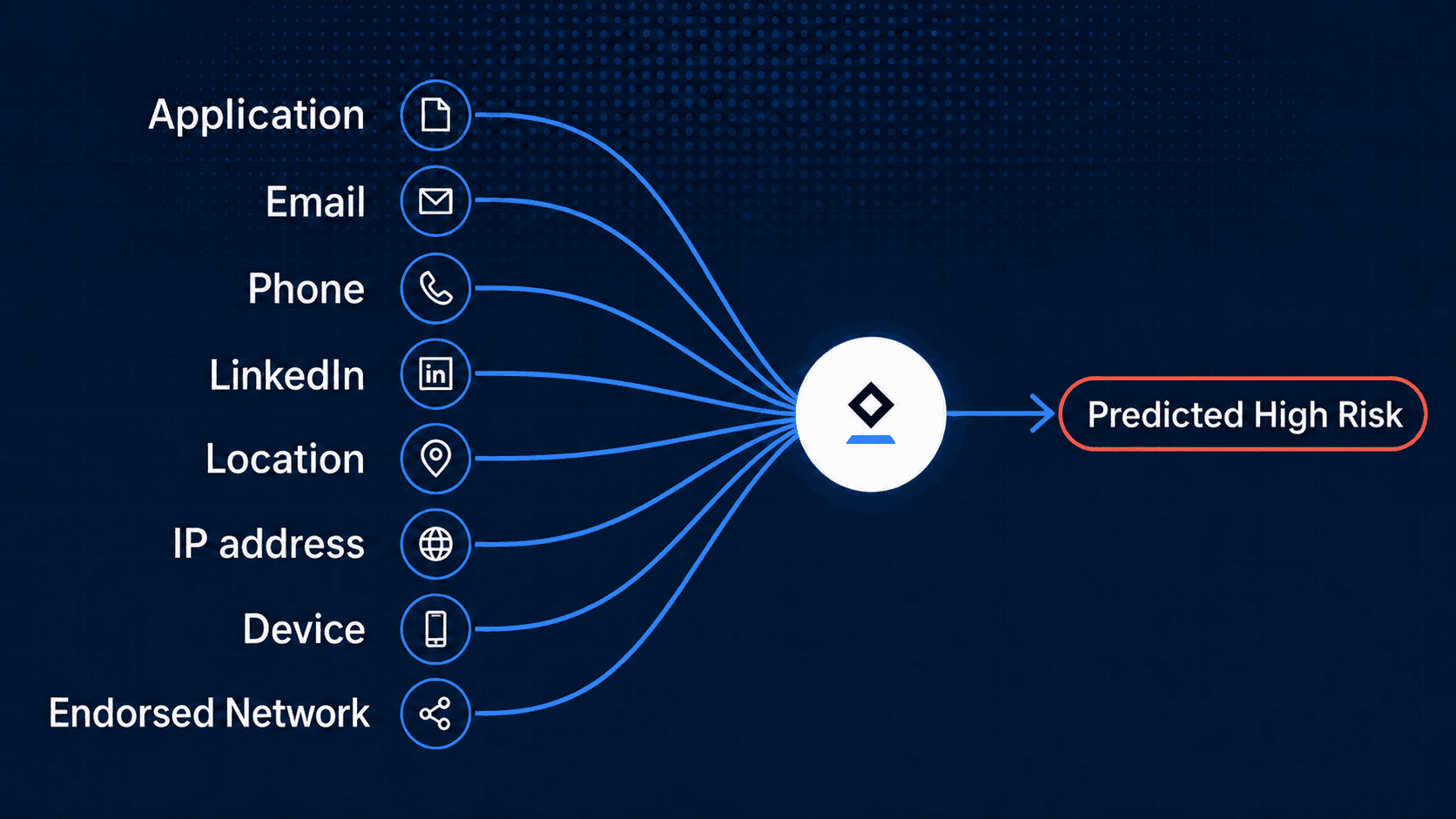
Endorsed Releases FraudShield Applicant-Fraud Analytics
Recruiting teams have had very little public data for understanding how candidate fraud changes across roles and hiring models. At RecOpsCon, we shared an early analysis from FraudShield to help fill that gap.
The data is generated from Endorsed's own fraud-detection results across millions of applicant records. It measures probable applicant fraud, not adjudicated criminal activity.
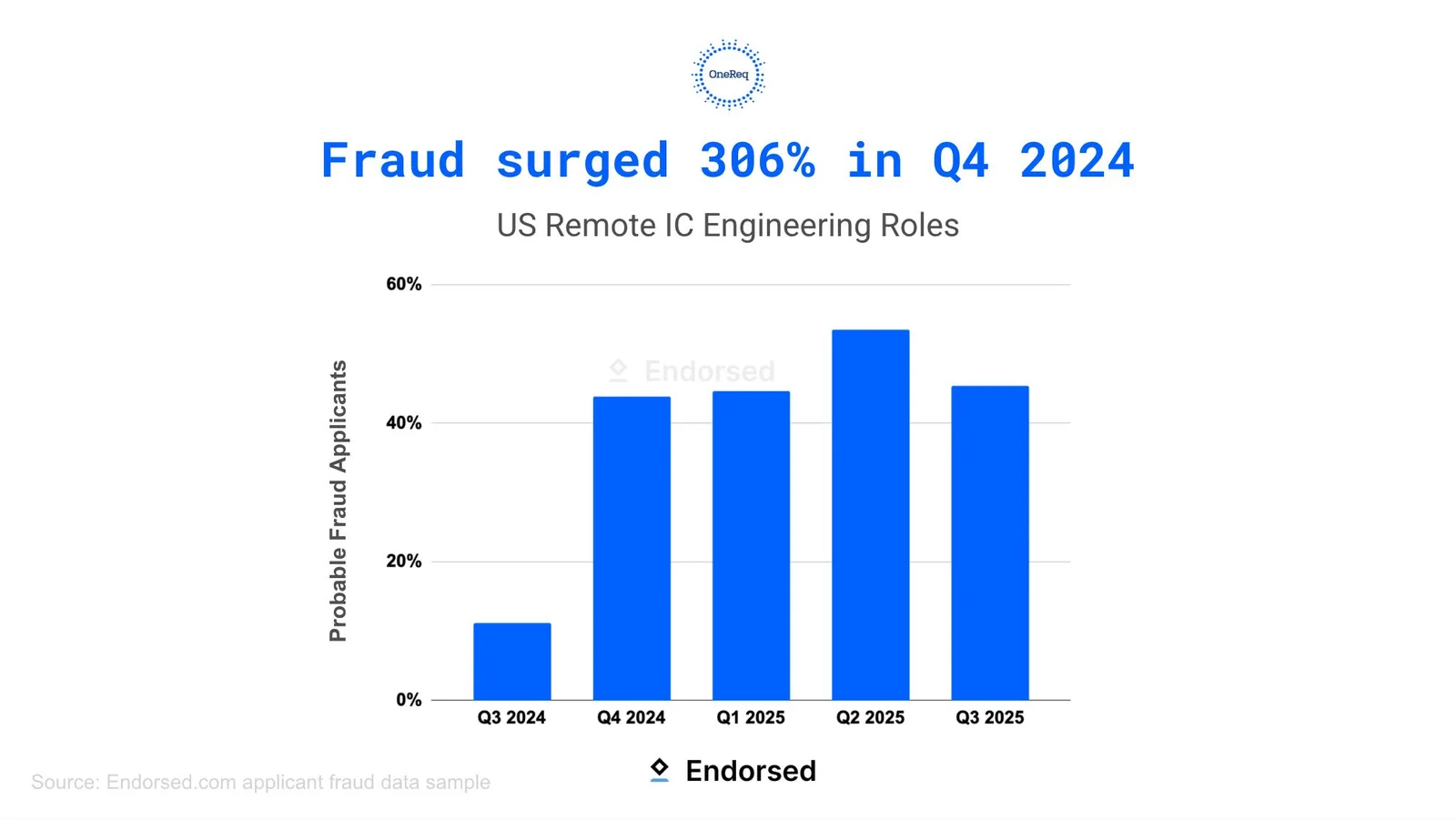
Fraud Rose Sharply in Remote Engineering Applications
In this sample, probable fraud among applicants to U.S. remote individual-contributor engineering roles rose from about 11% in Q3 2024 to about 44% in Q4 2024. The rate then remained elevated through the first three quarters of 2025.
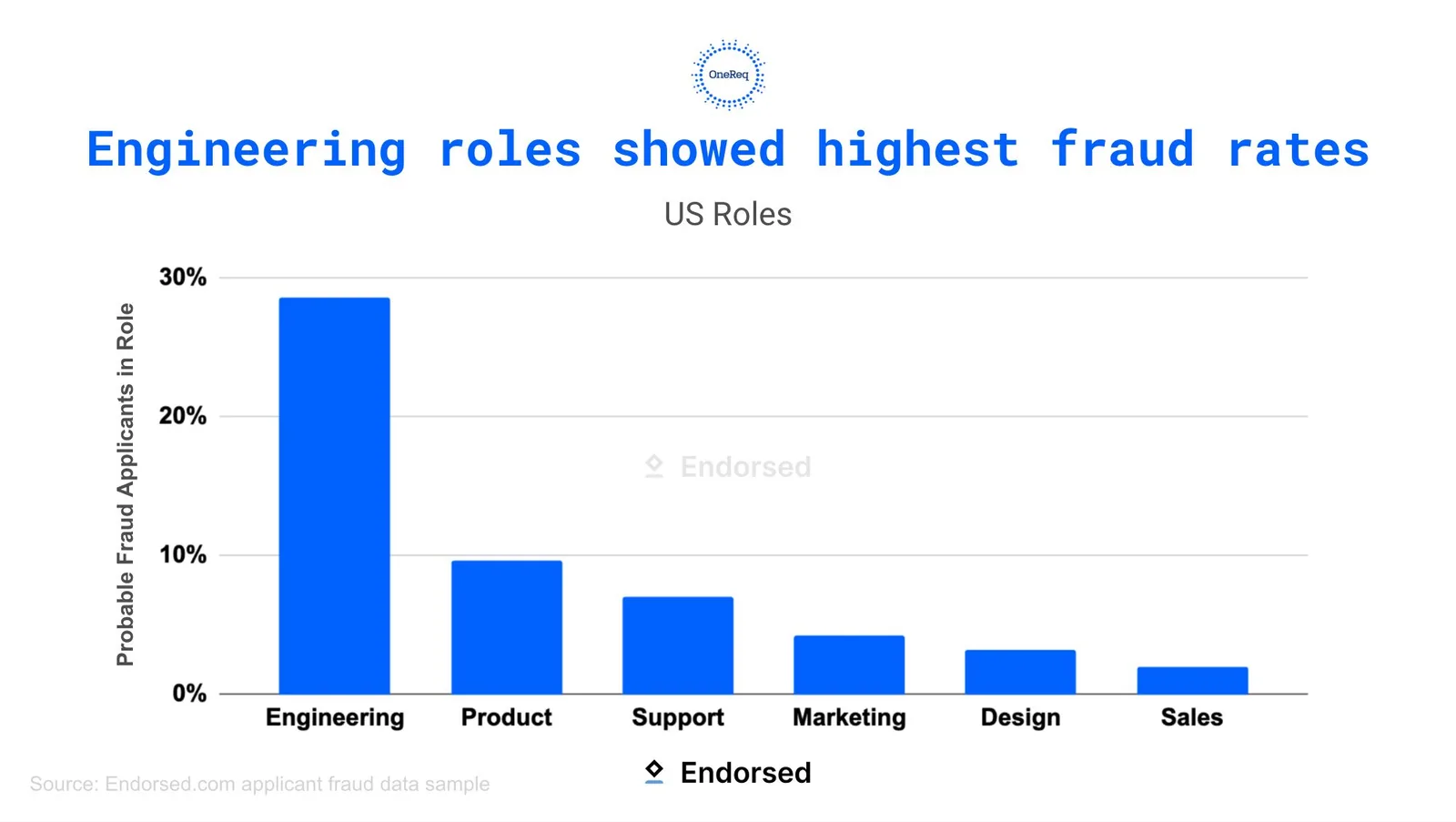
Engineering Roles Had the Highest Rate
Across the U.S. roles in this analysis, engineering had the highest probable-fraud rate. Product followed, while support, marketing, design, and sales were lower.
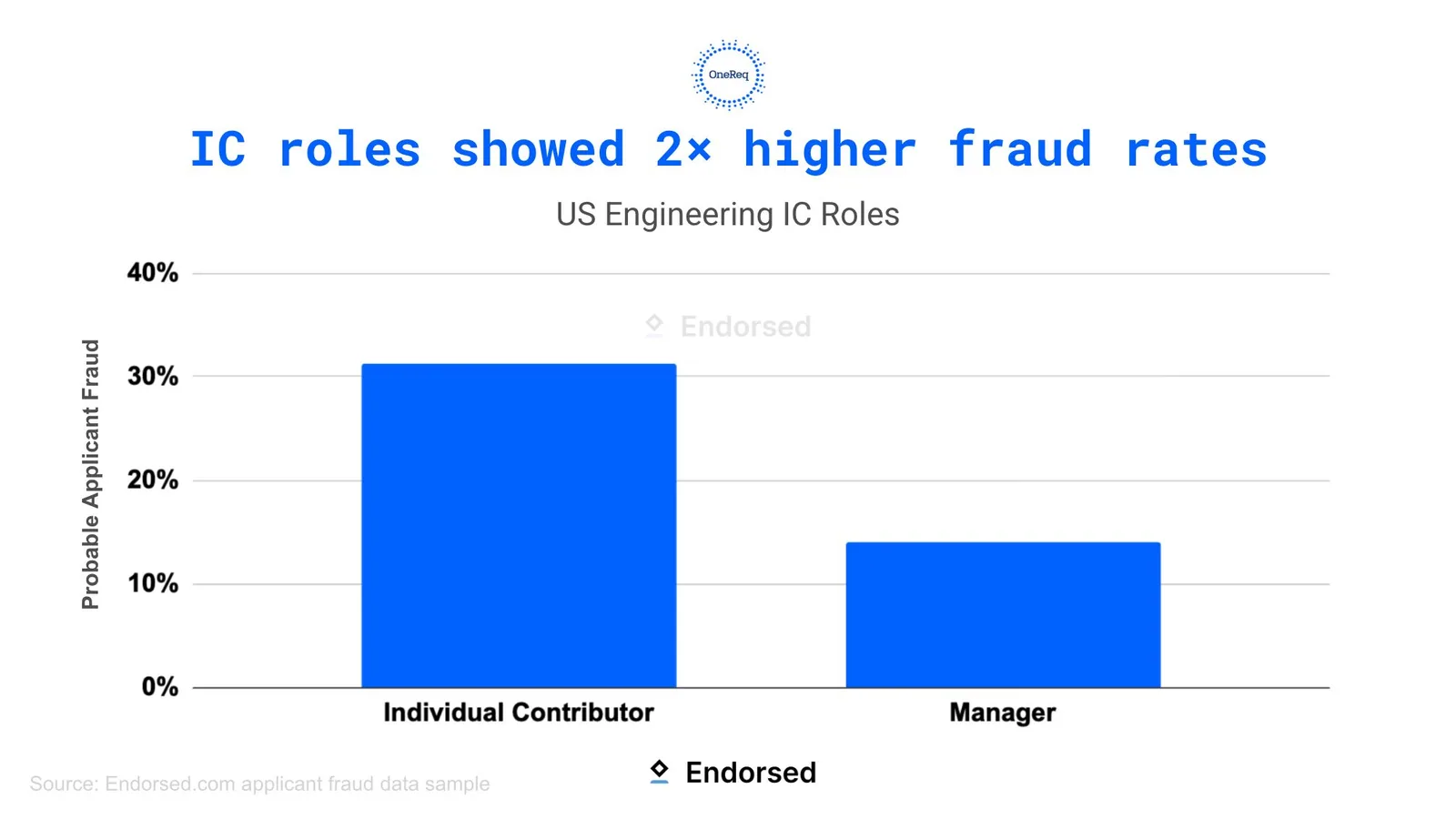
Individual-Contributor Roles Were Roughly Twice as High
U.S. engineering individual-contributor roles showed a probable-fraud rate of roughly 31%, compared with about 14% for engineering managers in the same analysis.
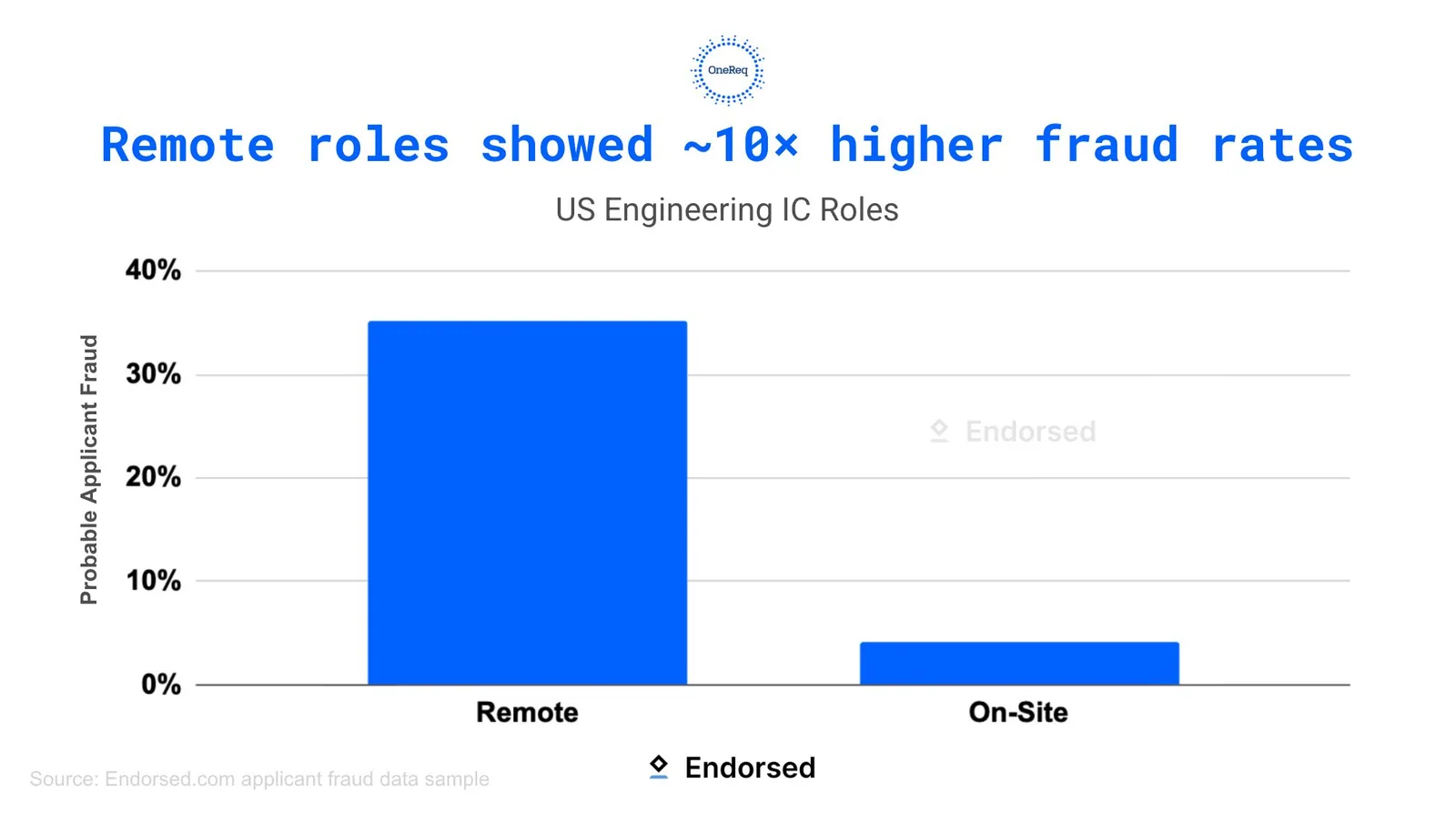
Remote Roles Were About Ten Times Higher
Within U.S. engineering individual-contributor roles, the observed probable-fraud rate was about 35% for remote openings and about 4% for on-site openings.
How to Read This Data
This is a sample of Endorsed customer activity, primarily from Series B through pre-IPO technology companies. It is not a population estimate for every employer, geography, or role. Company stage, industry, applicant source, hiring process, and the mix of remote work can all change the result.
The practical takeaway is not that every remote engineer should face more friction. It is that teams should measure the shape of fraud in their own funnel, review multiple signals together, and protect genuine candidates from being buried by automated or fraudulent applications.